環境資訊中心外電;姜唯 翻譯;林大利 審校;稿源:Carbon Brief
根據一項新,理論上,用太陽能板取代全美的水力發電廠,只需13%的空間。研究人員表示,這個少得驚人的數字顯示,逐步淘汰水力發電這種號稱再生、卻會嚴重破壞生態系統的能源生產方式,其實是個有吸引力的選項。
目前,水力是美國電力結構很重要的一部分,佔6%以上,提供其他再生能源缺少的彈性。但隨著現有水力發電站接近壽命終點,以及影響環境的風險日益增加,美國可能有越來越多水壩被淘汰。如果不繼續蓋水壩,就需要以其他技術取代,而這份發表在「自然永續性」(Nature Sustainability)期刊的新研究主張,大規模推廣太陽能是一個潛在的選項。
作者強調本研究為「純理論」,但考量水壩對美國河道的壓力,仍值得考慮用其他再生能源作為替代方案。

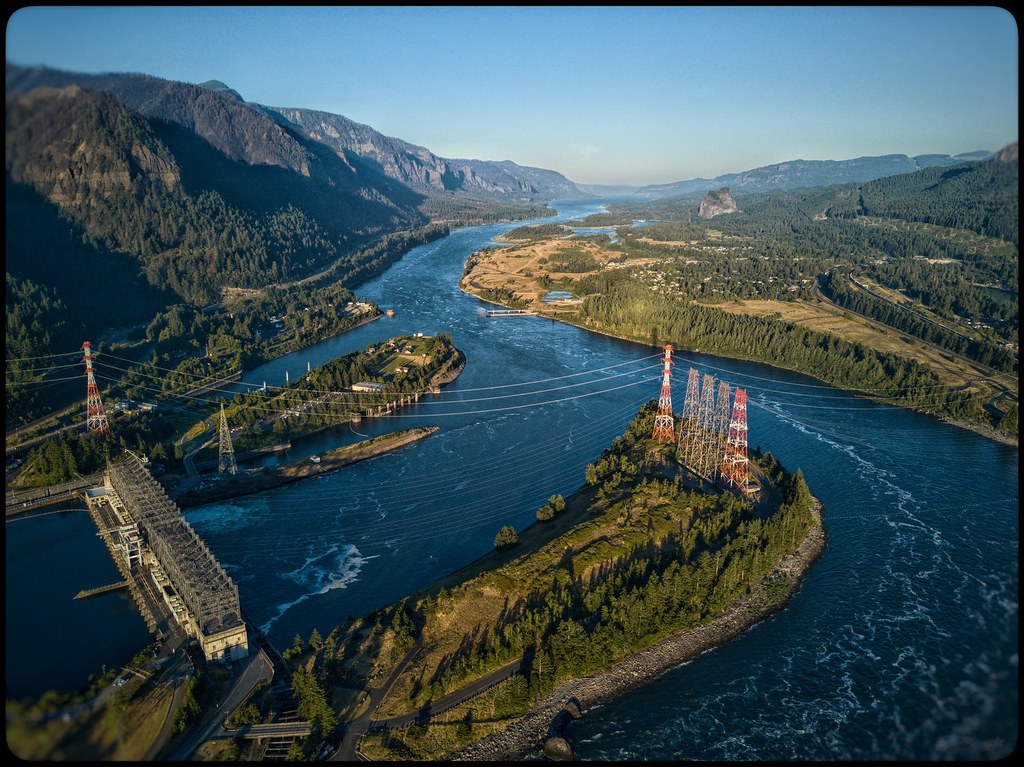
Rafael Kaup攝, 。
大型水壩為環境帶來「嚴重傷害」
水壩在美國已有超過一個世紀的歷史,世界上第一座水力發電廠於1882年在威斯康辛州開始運作。1940年,水力發電佔全美發電量的40%。
今天,許多發展中國家正試圖複製這種快速成長模式。安哥拉、緬甸等國家正投資大型水力發電計畫,以號稱比化石燃料還要環保的方式發電。
然而在已經有水力發電廠的地區,對水壩帶來的副作用的反應卻越來越強烈。
研究主持人、紐約城市大學水域保育生物學家沃德曼(John Waldman)指出,許多環保人士認為水壩是「河流的血栓」,對生態系統造成了「嚴重傷害」 。
他說,最典型的受害動物是洄游魚類,如鮭魚和鰣魚,由於遷徙路徑受阻,部分地區洄游魚類下降了幾個數量級。
水壩也會導致當地生物多樣性下降、沉積物增加,當水庫中的水變暖時,河水溫度也隨之發生變化。
水壩甚至會成為碳排放源,因為淹水的大片土地會導致水中微生物排出甲烷和其他溫室氣體。
因此,過去的30年間美國已經拆除了1000多座水壩,科學家也發現狀況有顯著的改善。
世界自然基金會(WWF)全球淡水科學家歐普曼(Jeff Opperman)博士表示,拆除大壩是解決淡水物種「急遽減少」最有效的方法之一。20年前緬因州肯納貝克河上的愛德華茲大壩被拆除後,河中產卵的鯡魚數量增加了近百倍。
水力發電為電網帶來的「調度彈性」
目前為止美國已拆除的水壩對國家整體電力組合的貢獻相對小,但如果打算拆除更大的水壩,勢必得找到替代方案。
這可能不是很容易,因為水壩提供了必要的電網服務。美國能源部的水力發電願景報告預測,水力發電對電網規劃和營運的貢獻未來將會增加,「具體來說,水力發電可以快速根據電力負載和發電設備之間的差異迅速增加和減少發電量,這有助於將其他再生能源(如風能和太陽能)整合到電網中。」
但隨著美國許多老舊水壩的利潤減少並且壽命即將結束,沃德曼說其他再生能源可能可以取代部分老化的水壩,甚至提供部分的穩定性。

Karl Specht攝, 。
大規模更換
在他們的「思想實驗」中,沃德曼和團隊利用美國陸軍工程兵團的國家水壩庫存資料,來確定需要多少公頃的工業規模光伏(PV)電池才可取代現有水壩所產生的電力。
他們計算出,如果美國本土所有2,603個水壩(即夏威夷和阿拉斯加以外的48州)都被拆除換成太陽能電池板,將只佔其水庫所覆蓋面積的13%。
在部分地區,這個差異特別明顯。像佛羅里達目前四座水壩共26,520公頃,換成太陽能板不過一個紐約中央公園的面積(339.94公頃)。
作者表示他們沒有考量安裝太陽能板的成本,因為成本和地點高度相關。
沃德曼表示,這麼做的整體正效應是換回自由流動的河流,替代的再生能源也不必只有一種,「放乾一個水庫可以換回大片的土地。可以在水庫底下鋪太陽能板,也可以放些在水面上漂…水庫通常在山谷裡,也許能延著山脊架設風機,也許利用流體動力學或分流方法獲取一些水能而不會阻擋河流。」
然而,雖然將美國400萬公頃的水庫縮小到一個達拉威州(美國第二小的州)的面積聽起來似乎很吸引人,但沃爾德曼承認,對於許多水壩而言,這根本不可行。尤其水壩經常提供重要的額外社會效益,包括飲用水供應、防洪和娛樂活動。沃爾德曼指出,「儘管我知道我們永遠不可能拆除美國2,603座水壩,但在有所選擇時,還是有很大的空間可以往這個方向考慮。」
而且,儘管太陽能板佔用的空間較小,還是有其他潛在問題,像是可能會破壞棲息地並導致生物多樣性流失。「根據定義,以前的水庫將沿著河流興建,而那些土地……通常是野生動植物最有價值的棲息地,也往往是重要的休閒娛樂場所。」
針對這些問題,作者指出過去的研究顯示,和其他形式的發電相比,太陽能發電的危害較小。他們也指出,用太陽能取代水力發電可以不要在水庫進行。
彌補電網的不足
國際水電協會溝通主任亨利(Will Henley)表示,水力發電廠的穩定性不太容易被太陽能取代,建議採用整合兩種形式的發電系統:「與其用太陽能取代水力發電,更永續的方法是優先考慮水力發電現代化投資,結合兩種技術優勢。今日太陽能板可以安裝在水庫表面或與水庫相鄰,增加而非取代整體水庫發電量。」
沃德曼說,雖然水力發電確實提供了關鍵的電網服務,但它們提供的電力也並非總是一致,而且可能受乾旱等氣候現象的影響,不如用一系列替代再生技術建立「能源公園」,利用水力發電廠的現有電力線,還具備「光靠水力發電不足以提供的穩定性」。
基於這些機會,對許多有豐富太陽能資源的發展中國家來說,單一大型水力發電廠規劃其實是「重大錯誤」,可能破壞自然水道。然而在美國,歐普曼說這個問題幾乎沒有實際意義,因為全美各地的老水壩和老化中的大壩都沒有對電力做出重大貢獻,讓許多河流恢復自由流動,不需要拆除大型重要水電大壩。
Solar power could replace all US hydro dams using ‘just 13% of the space’ by Josh Gabbatiss
Banks of solar panels would be able to replace every electricity-producing dam in the US using just 13% of the space, according to a new study.
The researchers say this “surprisingly modest” figure provides a “tantalising” vision of what could be achieved if the nation phased out a power source that, while renewable, takes aon ecosystems.
As it stands, hydropower is an essential component in the nation’s power mix, contributing of its electricity and offering a flexibility that is not always provided by other renewables.
But with existing infrastructure nearing the end of its lifespan, and growing concerns about its environmental impact, US dams are increasingly being removed from service altogether.
If hydro dams are not replaced, other technologies will need to step into the breach, and the new paper – published in – suggests the mass rollout of solar power is a potential option.
While the researchers emphasise their results are “clearly theoretical”, they highlight the capacity of alternative renewables to replace hydro dams – which could also take pressure off disrupted US waterways.
‘Tremendous harm’
Dams have been used in the US to generate renewable energy for well , with the world’s first hydroelectric power plant beginning operation in Wisconsin in 1882. By 1940, hydropower accounted for 40% of the nation’s electricity generation.
Today, much of the developing world is seeking to imitate this rapid growth. Nations from to are investing in large hydropower projects to generate power in a manner a greener alternative to burning fossil fuels.
However, in areas where hydropower is well established there has been a growing backlash against dams due to their extensive impact on the environmental.
According to , an aquatic conservation biologist from the who led the new study, many environmentalists have come to see dams as “blood clots in our watersheds” owing to the “tremendous harm” they have done to ecosystems.
He says the “poster children” for this effect are migratory fish, such as salmon and shad, whose numbers have declined by several orders of magnitude in some regions due to their migration paths being blocked.
Dams can also lead to , and as water sitting in reservoirs warms up.
They can even become , as flooding great areas of land leads to microbes living in the water pumping out methane and other greenhouse gases.
Responding to these issues, have been dismantled in the past three decades, and scientists marked improvements as a result.
, WWF’s global led scientist for freshwater, tells Carbon Brief dam removal is “one of the most effective ways” to address the “dramatic decline” in freshwater species. Since of the Edwards Dam on Maine’s Kennebec River 20 years ago, for example, numbers of spawning river herring have increased nearly a hundred-fold.
Flexible dams
The hydro dams removed so far have made relatively small contributions to the nation’s overall electricity mix, but if larger dams are scheduled for removal, finding replacements will be vital.
This could be challenging, as hydro dams provide essential grid services. In the , it anticipates the contribution of hydropower to grid planning and operations will actually increase in the future:
“In particular, hydropower’s flexibility to rapidly ramp generation up and down in response to changes in the balance between electrical loads and generators facilitates integration of renewable variable generation, such as wind and solar energy, into the grid.”
But with many of the nation’s older dams becoming less profitable and coming to the end of their lifespans, Waldman says other renewables may be able to replace at least some of this ageing infrastructure, and even provide some of this much-needed stability:
“I think we need to have a new paradigm about restoring rivers, and I think that the advent of really seriously alternative energy sources is one way to accomplish this… I think that’s pretty astonishing and tantalising too, I’m hoping this presents a different mindset for people who think about our energy futures.”
Mass replacement
In their “thought experiment”, Waldman and his colleagues used data from the US Army Corps of Engineers’ to determine how many hectares of industrial-scale photovoltaic (PV) cells would be required to replace the power produced by existing dams.
They calculated that if all of the 2,603 hydro dams in the conterminous US – that is, all states excluding Hawaii and Alaska – were dismantled, the replacement solar panels would only take up 13% of the area covered by their reservoirs.
If half the drained land was covered in industrial-scale solar, the team estimates it could produce nearly three and a half times the power currently generated at those sites.
In some regions, their results were particularly stark. For example, Florida could replace its four hydro dams, which currently take up 26,520 ha, with an area of solar panels roughly the size of New York’s Central Park.
The authors note that they do not consider the costs of installing solar power in their analysis, which are likely to be “highly site specific”.
Waldman says that the overall positive effect of such a shift would be that “we would get our free flowing rivers back”, and that the replacement need not be restricted to one form of renewable energy:
“When you drain a reservoir, you get back a lot of land. You have the opportunity to put solar on part of the reservoir bottom, and maybe even floating solar in some places… because many reservoirs are in valleys, you might be able to put wind power on the ridge lines and you also have the possibility of capturing some of the power of the water using hydrokinetic or diversionary approaches, which allow you to capture some power but don’t block the river.”
However, while condensing down the country’s 4m ha of reservoirs to an area the size of Delaware – the second smallest state in the US – seems an appealing proposal, Waldman acknowledges that for many dams it simply would not be feasible.
Not least, this is because dams frequently provide important additional societal benefits including the supply of drinking water, flood control and recreational activities. Waldman notes:
“Even though I recognise we are never going to take down all 2,603 dams in the US, and switch to this notion, there is a lot of room to push the idea of doing this in selective circumstances.”
However, even if it took up less space, industrial-scale PV generation comes with , as it can fragment habitats and lead to biodiversity loss. “By definition, the former reservoir sites will be land along rivers, and that land… is often among the most valuable habitats for wildlife and also often important for recreation,” says Opperman.
Responding to these concerns, the authors point to which has suggested that, compared to other forms of power generation, solar power is less harmful. They also note that the power replacement with solar could take place at sites away from the reservoirs.
Grid shortfall
As for whether other renewables could make up for the shortfall in grid services, the authors say improved battery storage capabilities may be able to provide the flexibility current granted by hydropower.
However, while they say such technologies could make up for the more erratic nature of solar power, they also note that “more research is needed” in this area.
, head of communications at the , tells Carbon Brief the services provided by hydro dams would not be so easily replaced by solar, and suggests instead a system that incorporates both forms of power generation:
“Rather than replacing hydropower facilities with solar PV, a far more sustainable approach would be to prioritise hydropower modernisation investment which combines the strengths of both technologies. Today solar PV can be installed on the surface, or adjacent to a reservoir, increasing rather than replacing the overall generating capacity.”
Waldman says that while hydro dams do provide critical grid services, the power they supply is not always consistent, and can be impacted by phenomena such as droughts.
Given this, he says an array of alternative renewable technologies could be used to create “energy parks” that tap into existing power lines formerly installed to serve hydro dams and come with “resilience that is not provided by hydro alone”.
Given these perceived opportunities, Waldman says many developing nations are making a “big mistake” embarking on major hydro projects that may disrupt pristine waterways, given their ample solar resources.
In the US, however, Opperman says the issue is largely moot owing to the “huge pool” of ageing and increasingly obsolete dams across the country that are not making significant contributions to the power sector. This means many free-flowing rivers could be restored without addressing the country’s large, important hydropower dams:
“This isn’t to say that we should never consider river restoration and dam removal that would entail a loss of a dam’s benefits of electricity generation or water storage, because the environmental and social gains might be worth it. But obviously, projects with major trade-offs will always be more complicated.”
※ 全文及圖片詳見:()
※ 論文資料: Waldman, J. et al. (2019) Solar-power replacement as a solution for hydropower foregone in US dam removals, Nature Sustainability,
作者
如果有一件事是重要的,如果能為孩子實現一個願望,那就是人類與大自然和諧共存。
於特有生物研究保育中心服務,小鳥和棲地是主要的研究對象。是龜毛的讀者,認為龜毛是探索世界的美德。
本站聲明:網站內容來源再生能源資訊網https://e-info.org.tw/,如有侵權請聯繫我們,我們將及時處理本站聲明:網站內容來源再生能源資訊網https://e-info.org.tw/,如有侵權請聯繫我們,我們將及時處理
【工業車床機械買賣推薦】
※CNC車床加工相關資訊
※什麼是CNC加工?
※中古車床產品類別有哪些?各用途為?
※想尋找中古CNC、二手機械買賣代理商?