環境資訊中心外電;姜唯 翻譯;林大利 審校;稿源:ENS
全世界每分鐘購買近一百萬個塑膠瓶。隨著塑膠對環境的影響成為政治問題,包裝商品製造商和零售商不得不想辦法減少一次性容器流通。現在他們提出了解決問題的新想法和新技術。
過去的50年間,由於廉價一次性用品需求廣泛成長,塑膠的產量激增,造成環境破壞。儘管大眾對於遍布塑膠垃圾的海灘和吃下塑膠死亡的海洋動物屍體照片感到憤怒,塑膠浪潮卻沒有快速止息的跡象。
石油工業正投入數十億美元興建新廠房,以生產更多的塑膠,尤其是全球最大塑膠產品和塑膠垃圾產地-亞洲。
聚對苯二甲酸乙二酯(PET)常用於汽水和礦泉水瓶,以及其他家用或個人護理產品。市場研究公司歐睿國際(Euromonitor International)的資料顯示,僅去年一年,這些塑膠瓶的銷量就超過了4,800億瓶,幾乎是每分鐘一百萬瓶。
(Euromonitor International)包裝研究全球負責人道尼(Rosemarie Downey)告訴路透社,將循環設計原則導入包裝,也就是考慮產品的整個生命週期,包括使用和再利用,是品牌解決產品垃圾過多的一種方法,可以幫助回收、循環和再利用,減少塑膠廢棄物對環境的破壞。
歐盟已投票通過,2021年起禁用包括吸管、塑膠刀叉等10種一次性塑膠製品。所有塑膠包裝(塑膠廢棄物的主要來源)到2030年必須全面回收。
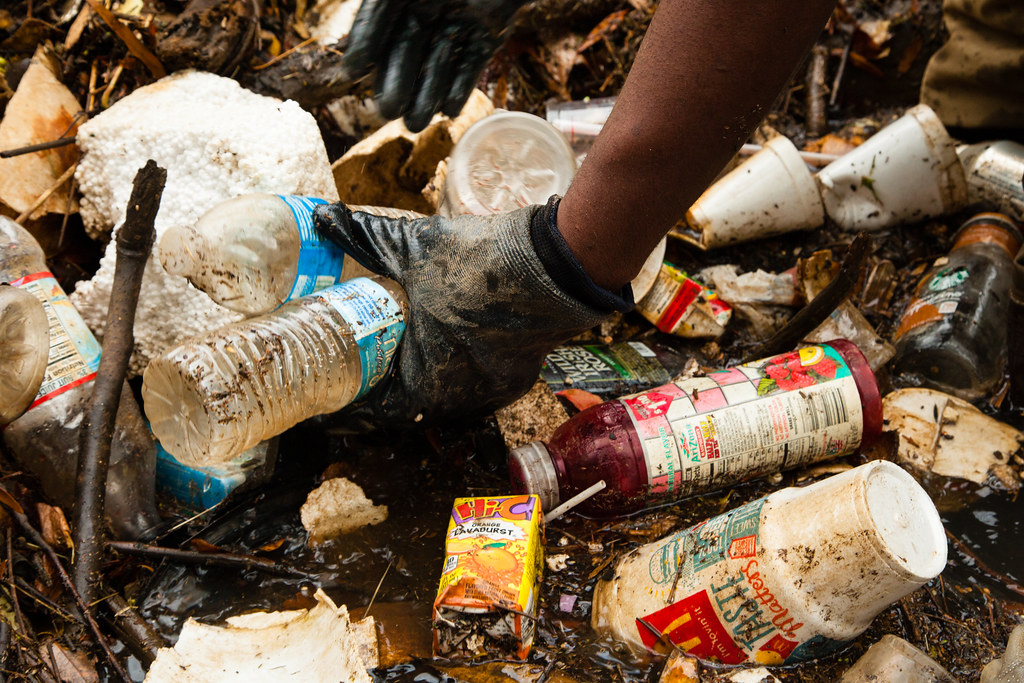
 全球每年產生大量塑膠垃圾。Chesapeake Bay Program(CC BY-NC 2.0)
所有塑膠廢棄物都可以重製成新塑膠
面對這個棘手的問題,科學家和企業的產品設計人員都在尋找防止一次性塑膠製品在環境中擴散的方法。
瑞典哥德堡查爾默斯理工大學,由太空、地球與環境系能源技術組主任圖曼教授領導的研究小組認為塑膠的韌性是一種資產。
圖曼說,塑膠不可降解的特性使其成為環境災難,也是循環使用的首選材料,是舊塑膠真正的價值所在,為塑膠的收集提供了經濟動力。
圖曼的研究團隊將塑膠蒸汽裂解,進行化學回收實驗,開發出一種可以將任何類型的塑膠廢棄物分解成分子的技術,所生成的氣體可轉化為品質與原始塑膠相同的新塑膠。
「我們找到合適的溫度(大約攝氏850度)、合適的加熱速率和停留時間,能夠每小時將200公斤塑膠廢棄物轉變成有用的氣體混合物。接著在分子層級回收,成為品質如初的新塑膠。」 圖曼說。
新製程可以讓今日的塑膠工廠變成回收精煉廠,並繼續利用既有的設備。
可口可樂用塑膠垃圾製造瓶子
10月15日,可口可樂公司與多個企業合作啟動「增強型回收」計畫(enhanced recycling),推出第一批用回收來的海洋塑膠廢棄物製成的概念塑膠瓶,顯示海洋塑膠垃圾確實可再利用於食品和飲料包裝。
雖然技術尚處於起步階段,但合作團隊還是生產出塑膠瓶樣品,作為概念驗證。
300個樣品瓶有25%的材料來自海洋塑膠廢棄物。可口可樂基金會部分贊助的循環海洋計畫(Mares Circulares)在西班牙和葡萄牙舉辦了84次淨灘活動,加上地中海12個港口的漁民帶回的塑膠廢棄物,投入此次概念瓶的製作。
海廢塑膠瓶顯示增強型回收技術的確有革命性的潛力,可以將使用過的任何品質的塑膠回收為食品或飲料包裝所需的高品質新塑膠。
一小步背後的高潛力技術
短期內,增強型回收將以商業規模導入既有回收商的廢棄物流,包括過去不可回收的塑膠和劣質可回收材料。可口可樂規劃2020年起將增強型回收用於部分產品的塑膠瓶。
可口可樂西歐公司技術和供應鏈總監岡佩爾(Bruno van Gompel)表示,增強回收技術的潛力巨大,不僅對本公司,對整個產業和社會都是令人振奮的消息。它能加速塑膠閉環經濟的發展,因此我們選擇投資。」
開發出專利增強型回收技術的荷蘭公司Ioniqa Technologies執行長胡浩(Tonnis Hooghoudt)說:「增強型回收將影響全球。透過與可口可樂和其他創投夥伴合作生產這種塑膠瓶,我們已經展現這種技術的潛力。我們的新工廠現已投入營運,並且正在擴大技術規模。我們的目標是徹底消除一次性塑膠和塑膠廢棄物。」
 菲律賓塑膠回收場的勞工。 。(CC BY-NC-ND 2.0)
數十個國家正試圖透過立法控制塑膠爆量。加拿大自由派首相特魯多(Justin Trudeau)政府6月宣布,2021年起將禁止一次性塑膠。
儘管具體細節尚未公布,但加拿大政府的宣示為可口可樂和百事可樂等賣了數十億個寶特瓶的大企業帶來壓力。
可口可樂公司表示,他們在2017年使用了300萬噸塑膠,每分鐘約200,000個塑膠瓶,百事可樂尚未公布其塑膠用量。
HP用海洋塑膠製造電腦
NextWave Plastics成員之一惠普公司(HP Inc.)9月27日宣布推出HP Elite Dragonfly,全世界第一台用海洋塑膠製造的筆記型電腦。
HP Elite Dragonfly是全世界最輕薄的商用電腦,重量不到一公斤(2.2磅)。它的揚聲器外殼50%是二手品回收再製塑膠,包括5%的海洋塑膠。
除了HP Elite Dragonfly外,HP還有另外兩種用海洋塑膠製成的產品,分別是全世界第一個海廢顯示器HP EliteDisplay E273d,以及用來自海地的海洋塑膠垃圾製成的墨水匣。
為確保海洋塑膠產品的規模繼續擴大,惠普承諾2020年推出的所有新款HP Elite、HP Pro桌上型和筆記型電腦中都含有海洋塑膠。
該公司還宣布,他們在海地進行的特殊回收計畫已經升級超過100萬磅的海洋塑膠瓶。
截至目前,HP已從海地採購了超過一百萬磅(450公噸)的海洋塑膠,等於超過3500萬個塑膠瓶,用於生產自家產品。
除了保護海洋和地球之外,HP的海洋塑膠計畫還為當地社區的經濟發展和教育創造了新的機會。 在海地,HP與「第一英里聯盟」的合作為該國成年人創造了1,100多個收入機會,並為150名兒童提供高品質教育、食品和醫療援助。
NextWave成員公司正在將海洋塑膠製成商品,以減少塑膠廢棄物進入海洋。同時也正往實現聯合國永續發展目標14.1邁進,要在2025年底之前減少至少25,000噸塑膠(相當於12億個寶特瓶)進入海洋 。
Turning the Plastic Tide NEW YORK, New York, October 22, 2019 (ENS)
Every minute around the world, almost one million plastic bottles are purchased. As the environmental impact of that plastic tide swells into a political issue, packaged goods sellers and retailers, pressured to stem the flow of single-use bottles and containers, are coming up with new ideas and technologies to solve the problem.
Plastic production has surged in the past 50 years, responding to the widespread demand for inexpensive, single-use disposable products that are devastating the environment. And, while images of plastic debris-covered beaches and marine animals dead from eating plastic have triggered public outrage, it won’t stop anytime soon.
The oil industry is pouring billions into new facilities to produce more plastics, particularly in Asia, the biggest regional producer of plastic and plastic waste.
Polyethylene terephthalate (PET) bottles are commonly used for soft drinks and mineral water, but can also be used for other household or personal care products. Data from Euromonitor International shows that more than 480 billion of these bottles were sold last year alone – almost one million every minute.
Rosemarie Downey, global head of packaging research at market research company , told Reuters that adopting circular design principles in packaging, which considers the entire lifecycle of a product, including use and reuse, is one way for brands to address surplus waste at the outset and can assist recovery, recycling, and reuse in order to reduce the damaging impact of plastic waste in the environment.
“Ultimately, mindful consumption of plastic is a global duty of everyone,” Downey said. “Consumers have their part to play to help realize zero-litter, as do corporate players in their use and handling, and governments in providing the necessary, optimized waste management infrastructure.”
The European Union has voted to outlaw 10 single-use plastic items, including straws, forks and knives, by 2021. It has also set targets for all plastic packaging, the top source of plastic waste, to be recyclable by 2030.
Faced with this difficult problem, scientists and corporate product designers alike have been searching for ways to keep single-use plastic items from proliferating in the environment.
The fact that plastics do not break down but accumulate in our ecosystems is a major environmental problem. But at Chalmers University of Technology in Gothenburg, Sweden, a research group led by Professor Henrik Thunman, who heads the Division of Energy Technology at the Department of Space, Earth and Environment, sees the resilience of plastic as an asset.
The nondegradable character of plastic that makes it such an environmental disaster also makes it a candidate for circular usage, creating a true value for used plastic, and thus an economic incentive to collect it, Thunman explains.
“We should not forget that plastic is a fantastic material – it gives us products that we could otherwise only dream of,” Thunman said. “The problem is that it is manufactured at such low cost, that it has been cheaper to produce new plastics from oil and fossil gas than from reusing plastic waste.”
Now, through experimenting with chemical recovery via steam cracking of plastic, Thunman’s research group at Chalmers has developed an efficient process for breaking any type of plastic waste down to a molecular level. The resulting gases can then be transformed into new plastics of the same quality as the original plastic.
“Through finding the right temperature, which is around 850 degrees Celsius, and the right heating rate and residence time, we have been able to demonstrate the proposed method at a scale where we turn 200 kg of plastic waste an hour into a useful gas mixture. That can then be recycled at the molecular level to become new plastic materials of virgin quality,” says Thunman.
The new process could transform today’s plastic factories into recycling refineries, right within the framework of their existing infrastructure.
Coca-Cola Makes Bottles From Plastic Ocean Debris
On October 15, the Coca-Cola company unveiled the first sample bottle made using recovered and recycled marine plastics, demonstrating that plastic ocean debris can be used in recycled packaging for food and drinks.
The sample bottle is the result of a partnership between Ioniqa Technologies, Indorama Ventures, Mares Circulares (Circular Seas) and The Coca-Cola Company.
Although enhanced recycling is still in its infancy, the partners produced the sample marine plastic bottles as a proof of concept for what the technology may achieve in time.
About 300 sample bottles have been produced using 25 percent recycled marine plastic retrieved from the Mediterranean Sea and beaches. The marine plastic in the bottles was collected and recovered by volunteers who participated in 84 beach cleanups in Spain and Portugal, as well as fishermen in 12 ports across the Mediterranean Sea, as part of the Mares Circulares or Circular Seas project, partially funded by The Coca-Cola Foundation.
The marine plastic bottle was developed to show the transformational potential of revolutionary enhanced recycling technologies, which can recycle previously used plastics of any quality back to the high-quality virgin plastic needed for food or drinks packaging.
A small step, but the technology behind it has big potential.
In the immediate term, enhanced recycling will be introduced at commercial scale using waste streams from existing recyclers, including previously unrecyclable plastics and lower-quality recyclables. From 2020, Coca-Cola plans to roll out this enhanced recycled content in some of its bottles.
Bruno van Gompel, technical and supply chain director, Coca-Cola Western Europe, says the potential for the technology is huge. “Enhanced recycling technologies are enormously exciting, not just for us but for industry and society at large. They accelerate the prospect of a closed-loop economy for plastic, which is why we are investing behind them.”
“As these begin to scale,” said van Gompel, “we will see all kinds of used plastics returned, as good as new, not just once but again and again, diverting waste streams from incineration and landfill.”
Tonnis Hooghoudt, CEO of Ioniqa Technologies, the Dutch company that developed the proprietary enhanced recycling technology, says, “The impact of enhanced recycling will be felt on a global scale. By working with Coca-Cola and Indorama to produce this bottle, we aim to show what this technology can deliver. Our new plant is now operational and we are bringing this technology to scale. In doing so, we aim to eliminate the concept of single-use plastic and plastic waste altogether.”
Some countries are trying to control the plastic tide through legislation. The Canadian government led by Liberal Prime Minister Justin Trudeau in June announced a ban on single-use plastics by 2021, joining over two dozen countries that have made similar moves.
Although specific details have yet to be released, Canada’s announcement puts pressure on big companies like Coca-Cola and PepsiCo that sell billions of single-use plastic bottles.
While PepsiCo has not yet disclosed its plastic use, Coca-Cola has shared that it used three million metric tons of plastic in 2017 – about 200,000 plastic bottles every minute.
Writing for “Corporate Knights,” a Canadian publication, Tim Nash said on June 17, “The massive amount of plastic waste in our water systems is becoming impossible to ignore. We know about the Great Pacific Garbage Patch, we’ve seen the large amounts of plastic being found in whales that wash up on shore, and we’ve heard about the latest study from WWF showing that the average person ingests a credit card’s worth of microplastics every single week.”
“Although specific details have yet to be released, Canada’s announcement puts pressure on big companies like Coca-Cola and PepsiCo that sell billions of single-use plastic bottles,” states Nash.
“I will give Coca-Cola credit for setting goals to design packaging that’s 100 percent recyclable globally by 2025, use at least 50 percent recycled materials by 2030, as well as collect and recycle the equivalent of 100 percent of every bottle and can sold by 2030,” wrote Nash. “They have their work cut out for them.”
HP Constructs Computers With Ocean-Bound Plastics
Computer-maker HP Inc., a member of NextWave Plastics, on September 27 announced the launch of the HP Elite Dragonfly, the world’s first notebook manufactured with ocean-bound plastics.
The HP Elite Dragonfly is the world’s lightest, most compact business computer, weighing less than one kilogram (2.2 pounds). Its speaker enclosure component is made with 50 percent post-consumer recycled plastic, including five percent ocean-bound plastics.
The HP Elite Dragonfly is one of three HP products made with ocean-bound plastics. Others include the HP EliteDisplay E273d, the world’s first display manufactured with ocean-bound plastics, and the Original HP ink cartridges made with plastic bottles collected in Haiti.
To ensure their ocean-bound plastics efforts continue to scale, HP commits to including ocean-bound plastic material in all new HP Elite and HP Pro desktop and notebook computers launching in 2020.
The company also announced it has upcycled more than one million pounds of ocean-bound plastic bottles as part of its unique operating model for recycling in Haiti.
To date, HP has sourced over one million pounds (450 metric tonnes) – more than 35 million plastic bottles – of ocean-bound plastics from Haiti for its products.
In addition to protecting the oceans and the planet, HP’s ocean-bound plastic programs are also creating new opportunities for economic advancement and education in local communities. In Haiti, HP’s partnership with the First Mile Coalition has helped create more than 1,100 income opportunities for adults in the country and has provided 150 children with quality education, food, and medical assistance.
NextWave member companies are establishing ocean-bound plastics as a commodity to decrease the volume of plastic waste before it enters the ocean.
“Since joining NextWave Plastics last year, HP has been a standout partner, and we are thrilled to see the team continue to lead the way in scaling one of the most effective supply chains that is turning off the tap on ocean-bound plastics while improving the local community,” said Dune Ives, executive director of Lonely Whale, the convening entity for NextWave Plastics, a consortium of worldwide businesses committed to scaling the use of ocean-bound plastics.
“There are currently more than 86 million metric tons of plastic in our ocean, and each year, over eight million metric tons of additional plastic enters the ocean,” Ives said. “We are proud that our member companies continue to scale commercially viable and operational ocean-bound plastics supply chains – keeping plastic in the economy and out of the ocean.”
NextWave member companies are currently on track, in alignment with UN Sustainable Development Goal 14.1, to divert a minimum of 25,000 tonnes of plastics, the equivalent of 1.2 billion single-use plastic water bottles, from entering the ocean by the end of the year 2025.
Ellen Jackowski, global head of Sustainability Strategy & Innovation, HP Inc, said, “Our circular economy strategy is about shifting our production to eliminate waste and enable a system that can sustain our levels of consumption in harmony with nature and our singular planet Earth for generations to come.”
※ 全文及圖片詳見:
作者
如果有一件事是重要的,如果能為孩子實現一個願望,那就是人類與大自然和諧共存。
於特有生物研究保育中心服務,小鳥和棲地是主要的研究對象。是龜毛的讀者,認為龜毛是探索世界的美德。
本站聲明:網站內容來源於https://e-info.org.tw/,如有侵權,請聯繫我們,我們將及時處理
【其他文章推薦】
※無塵擦拭布去污效果如何?
※影響示波器測試準確度的五大因素
※何謂電解水飲水機、全自動飲水機 ? 與一般飲水機差異在哪?
※噴霧洗滌塔實際應用案例分享
※各種升降平台款式?